**Tube Expanding For Industrial Boiler Pressure Seals**
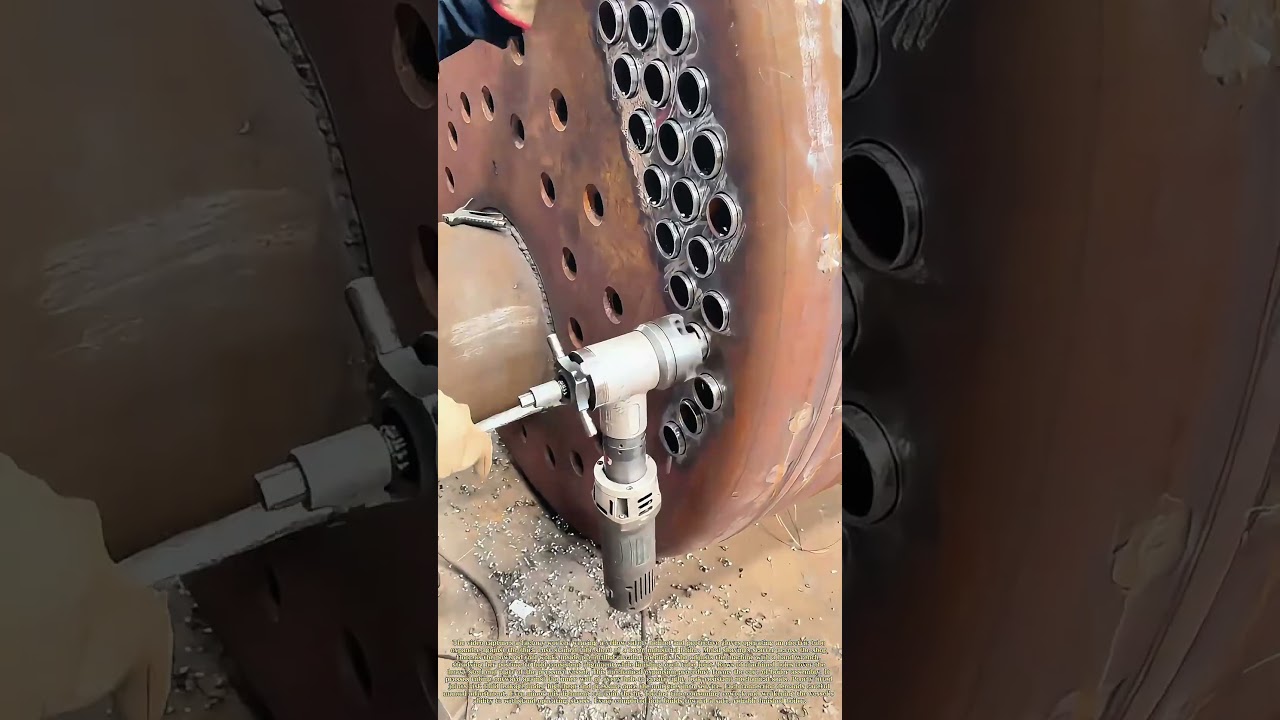
More than a century ago, metalworkers learned that rigid bolted or welded joints alone could not always hold up inside high‑temperature steam boilers. Repeated cycles of heating and cooling create shifting stress between separate metal components. Engineers adopted tube expanding as a practical method to lock heat‑exchange tubes firmly into the thick boiler tube sheet. The process deforms metal without melting it, generating tight contact that resists leakage across years of cyclic pressure changes.
• Mechanical expansion creates interference fit between tube and sheet metal. The expanding tool’s tapered rollers push the tube wall radially outward. The soft tube material stretches until it presses hard against the pre‑machined inner surface of the hole in the heavy plate. No adhesive fills this joint; security comes purely from controlled metal deformation. Correct expansion depth guarantees zero gaps where steam or hot water might escape under working pressure.
• Precise tool tuning determines joint quality. Operators adjust roller depth via hand wrench before starting every hole. Too little expansion leaves loose connections prone to seepage. Over‑expansion stretches tube walls too thin, introducing hidden cracks that may fail long after production ends. Workers judge proper setting from years of hands‑on practice rather than automatic readings alone. Small tweaks are made for every new batch of steel with slightly different hardness properties.
• Surface condition directly impacts final seal performance. The tube sheet holes must stay free of heavy rust, burrs and dirt before expansion begins. Any trapped grit or jagged metal edges scratch tube surfaces during swelling. Those scratches become starting points for fatigue cracks when the boiler heats up and cools down through daily operating cycles. Shops often clean each opening before the expander ever touches the workpiece.
• Repetitive work demands steady physical discipline. A full‑size industrial boiler holds dozens or even hundreds of tube holes. Every single opening receives the same careful setup, insertion and expansion sequence. Fatigue from repeated motions can cause subtle alignment drift. Experienced laborers pace themselves, checking each finished joint visually before moving on to the next hole. Consistency across every joint matters more than fast completion.
• Safety rules govern the whole workshop environment. Flying metal chips spray outward during expansion. Hard helmets, thick work gloves and sturdy work clothing shield operators from sharp debris. Power‑cable routing gets managed carefully to prevent tripping hazards across the chip‑covered floor. The massive heavy boiler shell itself sits securely supported, so it cannot shift while force is applied inside its holes.
• Complementary inspections follow expanding work. After all tubes are set, crews run pressure‑holding leak‑testing procedures. Pressurized fluid fills internal chambers so technicians can spot any weeping or dripping at expanded joints. Minor leaks mean re‑expansion or partial replacement of affected tubes before the boiler leaves the workshop. Units pass this testing before they can be put into real‑world service.
• Long‑term equipment reliability starts on the shop floor. Boilers deliver heat or power for thousands of operating hours. Joints built with careless expanding will develop leaks months or years later, forcing costly shutdowns for repair. Well‑executed tube expanding delays maintenance and extends the usable service life of large‑scale pressure equipment.
This workshop task demonstrates how unseen mechanical craft underpins heavy industry. Every expanded joint represents human skill working alongside metal physics to build equipment people rely upon for safe, consistent operation.
More than a century ago, metalworkers learned that rigid bolted or welded joints alone could not always hold up inside high‑temperature steam boilers. Repeated cycles of heating and cooling create shifting stress between separate metal components. Engineers adopted tube expanding as a practical method to lock heat‑exchange tubes firmly into the thick boiler tube sheet. The process deforms metal without melting it, generating tight contact that resists leakage across years of cyclic pressure changes.
• Mechanical expansion creates interference fit between tube and sheet metal. The expanding tool’s tapered rollers push the tube wall radially outward. The soft tube material stretches until it presses hard against the pre‑machined inner surface of the hole in the heavy plate. No adhesive fills this joint; security comes purely from controlled metal deformation. Correct expansion depth guarantees zero gaps where steam or hot water might escape under working pressure.
• Precise tool tuning determines joint quality. Operators adjust roller depth via hand wrench before starting every hole. Too little expansion leaves loose connections prone to seepage. Over‑expansion stretches tube walls too thin, introducing hidden cracks that may fail long after production ends. Workers judge proper setting from years of hands‑on practice rather than automatic readings alone. Small tweaks are made for every new batch of steel with slightly different hardness properties.
• Surface condition directly impacts final seal performance. The tube sheet holes must stay free of heavy rust, burrs and dirt before expansion begins. Any trapped grit or jagged metal edges scratch tube surfaces during swelling. Those scratches become starting points for fatigue cracks when the boiler heats up and cools down through daily operating cycles. Shops often clean each opening before the expander ever touches the workpiece.
• Repetitive work demands steady physical discipline. A full‑size industrial boiler holds dozens or even hundreds of tube holes. Every single opening receives the same careful setup, insertion and expansion sequence. Fatigue from repeated motions can cause subtle alignment drift. Experienced laborers pace themselves, checking each finished joint visually before moving on to the next hole. Consistency across every joint matters more than fast completion.
• Safety rules govern the whole workshop environment. Flying metal chips spray outward during expansion. Hard helmets, thick work gloves and sturdy work clothing shield operators from sharp debris. Power‑cable routing gets managed carefully to prevent tripping hazards across the chip‑covered floor. The massive heavy boiler shell itself sits securely supported, so it cannot shift while force is applied inside its holes.
• Complementary inspections follow expanding work. After all tubes are set, crews run pressure‑holding leak‑testing procedures. Pressurized fluid fills internal chambers so technicians can spot any weeping or dripping at expanded joints. Minor leaks mean re‑expansion or partial replacement of affected tubes before the boiler leaves the workshop. Units pass this testing before they can be put into real‑world service.
• Long‑term equipment reliability starts on the shop floor. Boilers deliver heat or power for thousands of operating hours. Joints built with careless expanding will develop leaks months or years later, forcing costly shutdowns for repair. Well‑executed tube expanding delays maintenance and extends the usable service life of large‑scale pressure equipment.
This workshop task demonstrates how unseen mechanical craft underpins heavy industry. Every expanded joint represents human skill working alongside metal physics to build equipment people rely upon for safe, consistent operation.
- Category
- Twitch Hot Tub
Commenting disabled.
Up Next
Autoplay
-
02:59

Digital Marketing For Workers Compensation Lawyer | Digital Marketing For Workers Comp Attorney
-
00:58

Part 40 | Workers 49$1 Hour Of Work???? #workers #job #work #construction #viralvideo #shorts
-
00:04

Hot-Sex-Tube.comhttps://hot-sex-tube.com › categoriesRussian videos on Hot-Sex-Tube.com
-
00:15

Exchanger Pipes Automatic Tube Plate Welding #welding #steel #boiler #tube #heat #pipa #automatic
-
00:30

Twitch's Solution To Hot Tub Streams #shorts
-
38:16

What should Twitch do about hot tub streams? || The Stanz Show #14
-
06:36

amouranth demonetized by twitch hot tub meta destroyed - lol
-
12:16

Twitch Adds a New Category for Hot Tub Streams