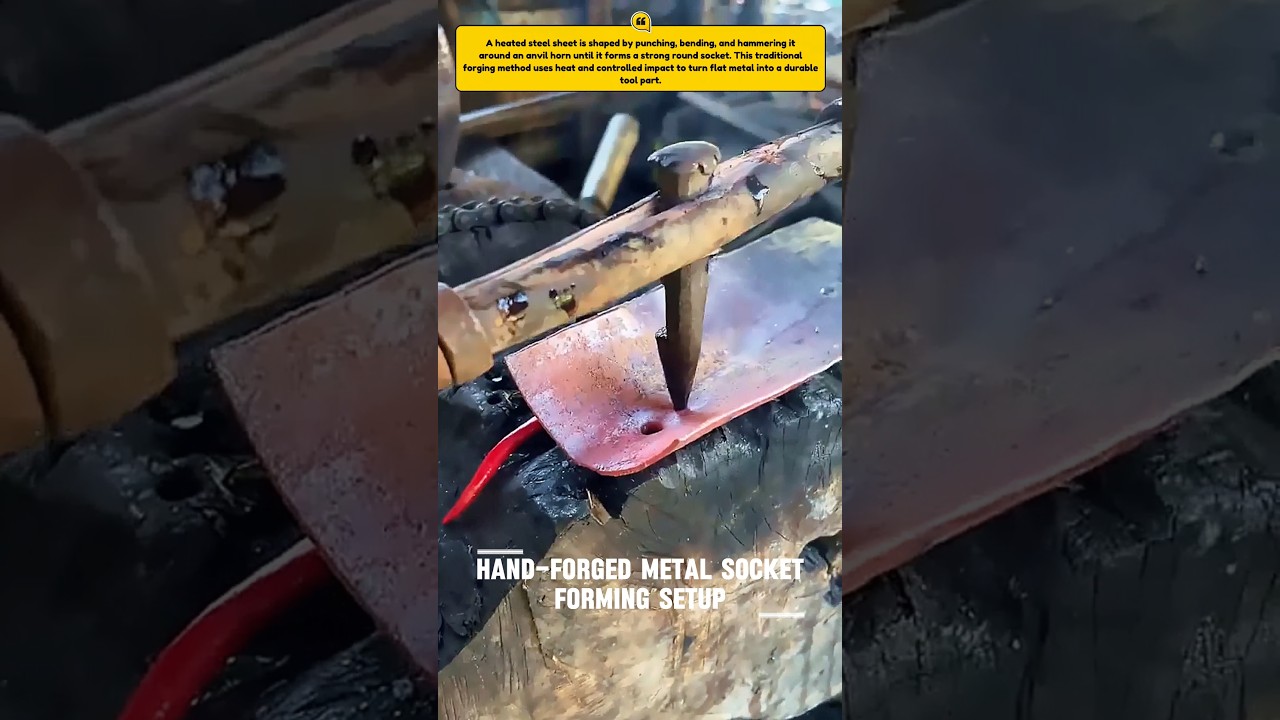
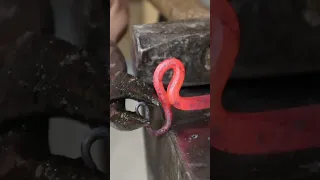
A heated steel sheet is shaped by punching, bending, and hammering it around an anvil horn until it forms a strong round socket. This traditional forging method uses heat and controlled impact to turn flat metal into a durable tool part.
Tool Name:
Hand-Forged Metal Socket Forming Setup
Specifications + Hand-Forged Metal Socket Forming Setup:
- Main tools: anvil horn, hammer, punch, tongs, and forge heat
- Material: heated steel sheet
- Process: hot punching, bending, curling, and hammer forming
- Use: forming a round socket or sleeve for hand tools
- Power source: manual hammering and forge heat
Advantages:
- Strong and durable result
- Low-cost traditional method
- Good for custom tool making
- Works without advanced machines
- Allows precise hand shaping
Disadvantages:
- Requires blacksmithing skill
- Slow compared to machine forming
- High heat can be dangerous
- Shape accuracy depends on experience
- Not ideal for mass production
Working Principle:
The steel sheet is heated until it becomes soft and workable, then a punch and hammer are used to mark and shape the metal. After that, the hot sheet is bent around the anvil horn and hammered repeatedly until it curls into a rounded socket.
Productivity Impact:
This method improves productivity for small workshops because custom tool parts can be made and repaired without factory equipment. It is slower than industrial forming, but very useful for handmade tools, repairs, and one-off metalwork.
#Blacksmithing
#Forging
#Metalwork
#HotSteel
#HandForged
#AnvilWork
#ForgedTools
#TraditionalCraft
#ToolMaking
#MetalShaping
#WorkshopSkills
#DIYTools
#Craftsmanship
#ManualTools
#MadeByHand
- Category
- Twitch Hot Tub
Commenting disabled.
Up Next
Autoplay
-
00:49
Forging tojok socket ????Red-hot, strong, durable.#Blacksmith #Forging #Tojok #Metalwork #Handmade
-
00:43
Red Hot Steel Turned Into a Perfect Carpenter Tool ???????? #forgedfromiron #forging
-
01:01
7-ton tube sheet manufacturing process #hot forging #tube sheet #custom-made special-shaped parts
-
01:00
Blacksmithing Forging Jewelry #blacksmith #forging #jewellery #forgingprocess #metal #blacksmithing
-
00:30

Twitch's Solution To Hot Tub Streams #shorts
-
38:16

What should Twitch do about hot tub streams? || The Stanz Show #14
-
06:36

amouranth demonetized by twitch hot tub meta destroyed - lol
-
12:16

Twitch Adds a New Category for Hot Tub Streams