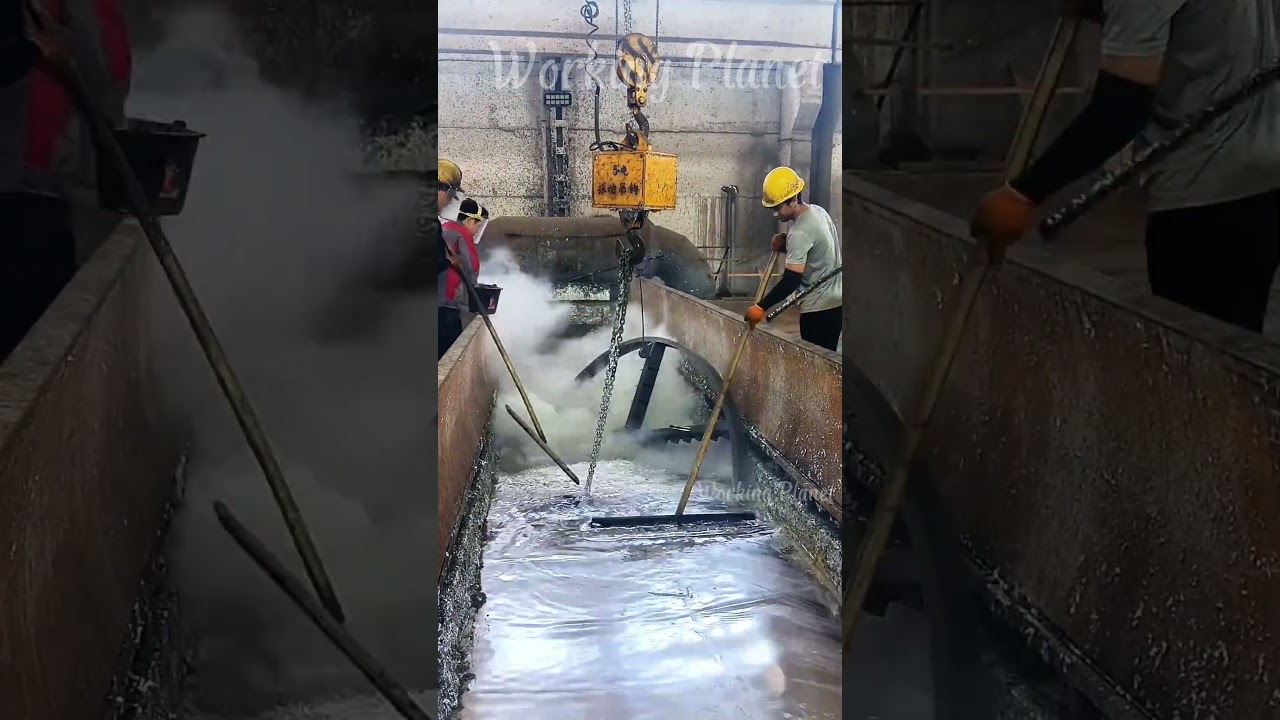
This video captures a striking hot-dip galvanizing process, where steel components are immersed into a bath of molten zinc to create a durable protective coating. In the scene, workers use long-handled tools to carefully guide and position the metal inside the industrial galvanizing tank while a lifting system controls the heavy components. Thick white steam rises from the bath as the heated steel interacts with the molten zinc, revealing just how demanding and carefully controlled this industrial surface-treatment process can be. The combination of heavy lifting equipment, manual positioning, and high-temperature processing demonstrates the precision required to protect large steel structures from long-term corrosion.
Hot-dip galvanizing works through a metallurgical reaction between clean steel and molten zinc, typically at around 450°C. Once the prepared steel enters the zinc bath, the zinc reacts with the iron at the surface and forms a series of zinc-iron alloy layers, followed by an outer layer of relatively pure zinc. After the component is removed and cooled, this bonded coating provides both a physical barrier and sacrificial protection. If the surface is scratched, the surrounding zinc can preferentially corrode instead of the exposed steel, helping extend the service life of the underlying material. This makes hot-dip galvanizing particularly valuable for steel exposed to moisture, outdoor environments, industrial conditions, and other corrosive surroundings.
※ Key Features & Innovation Highlights
※ Molten Zinc Immersion
Steel components are completely immersed in a bath of molten zinc, allowing the coating to reach complex surfaces and difficult-to-access areas.
※ Metallurgically Bonded Protection
Unlike ordinary paint, the zinc coating forms through a metallurgical reaction with the steel surface, creating a strongly bonded protective layer.
※ Sacrificial Corrosion Protection
Zinc provides cathodic protection, meaning it can sacrifice itself to help protect exposed steel when minor surface damage occurs.
※ Heavy-Duty Industrial Handling
Overhead lifting equipment and long-handled positioning tools allow workers to safely control large and heavy steel components during the dipping process.
※ Surface Preparation Matters
Before galvanizing, steel normally undergoes cleaning and fluxing stages to remove contaminants and prepare the surface for a uniform zinc reaction.
※ Long-Term Engineering Value
Hot-dip galvanizing can significantly extend the service life of steel structures, reducing maintenance requirements and improving durability in demanding environments.
What looks like a simple dip into a metal bath is actually a carefully engineered combination of heat, chemistry, metallurgy, lifting technology, and skilled human operation. Every controlled movement helps transform ordinary steel into a corrosion-resistant material capable of surviving years of harsh exposure.
- Category
- Twitch Hot Tub
Commenting disabled.
Up Next
Autoplay
-
00:23
Hot dip galvanizing plant#galvanizing #manufacturing #machine #plating #factory #metal #zinc #pp
-
01:00

When I dip, you dip, we dip w/ @AbroadinJapan #shorts
-
00:12
Hot dip galvanizing of pipe fittings
-
00:38
Mini hot dip galvanizing plant #galvanizing #machine #manufacturing #plating #zinc #metal #factory
-
00:30

Twitch's Solution To Hot Tub Streams #shorts
-
38:16

What should Twitch do about hot tub streams? || The Stanz Show #14
-
06:36

amouranth demonetized by twitch hot tub meta destroyed - lol
-
12:16

Twitch Adds a New Category for Hot Tub Streams