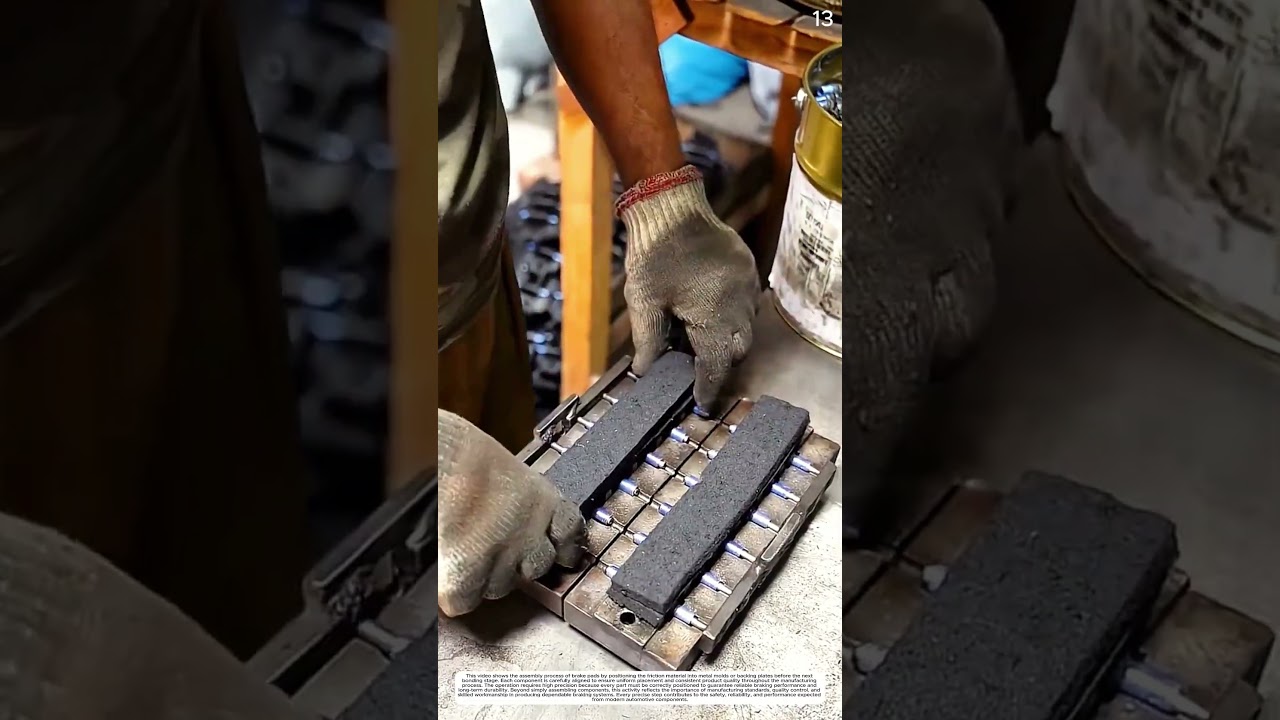
In the landscape of modern industrial manufacturing, the precision molding of composite rubber-and-metal components plays a critical role in producing reliable mechanical parts for automotive, machinery, and hardware applications. While large automated factories produce high-volume standard goods, specialized semi-manual compression molding remains essential for assembling complex multi-material components with exact insert placements. Understanding the intricate sequence of multi-cavity hot press molding reveals how worker dexterity, clever manual alignment fixtures, and thermal pressure work together to bind loose metal springs with resilient elastomeric compounds into high-performance industrial components.
The visual sequence begins with an operator seated at a workshop station, wearing thick protective gloves. Using a custom multi-pronged rack jig, the operator lifts a array of small metal spring inserts from a storage bin in a single motion. The worker precisely aligns and seats these metal springs into the corresponding slots of a heavy, multi-cavity bottom mold plate. Chronologically, once all metal inserts are positioned, the operator lays a strip of dense black unvulcanized rubber compound over the entire cavity arrangement. The worker then places the heavy metal top cover onto the mold assembly, locks the fixture, and subjects it to thermal compression pressing. After the heating cycle, the operator uses a long metal pry bar to unseal the lid, uncovering a neatly arranged matrix of vulcanized black rubber components with embedded spring inserts ready for gathering.
From a functional standpoint, the multi-cavity compression mold operates through combined thermal energy and directional mechanical pressure. The custom multi-pronged loading jig allows the operator to pre-align several delicate metal inserts simultaneously, preventing individual misplacement and protecting hands from hot mold surfaces. When closed and compressed, the heated metal mold causes the raw rubber strip to flow evenly around each positioned spring insert, filling every micro-cavity before curing. This heat-induced vulcanization creates a strong mechanical bond between the raw elastomeric matrix and the metal spring coils without requiring secondary adhesives.
The implementation of this specialized compression molding process provides substantial productivity and economic benefits for small-to-medium component manufacturing. Utilizing multi-cavity mold plates drastically increases output volume per press cycle, allowing hundreds of uniform parts to be produced within minutes. The pre-alignment jig cuts insert loading times significantly while eliminating human positioning errors, ensuring high dimensional consistency across every batch. Furthermore, molding raw rubber directly around metal inserts reduces material scrap, eliminates secondary assembly steps, and delivers durable, multi-material components with superior structural integrity and market value.
Ultimately, this manufacturing sequence offers a satisfying visual demonstration of human coordination meeting mechanical design. It demonstrates how methodical manual loading and precise compression tooling transform basic metal springs and raw rubber strips into refined, high-value industrial parts engineered for heavy-duty applications.
- Category
- Twitch Hot Tub
Commenting disabled.
Up Next
Autoplay
-
00:52

The Man Steals Devil Fruit And Turns Into Rubber Man. #drama #foryou
-
00:16

Sink turns into a hot tub with miniature floating rubber ducks ai #aishort #ytaivideo #animaldance
-
00:04
the process of pressing iron into hot iron with a strong pressing machine #shorts
-
07:33

You're molding into it! Benji BURST INTO LAUGHTER after Yuno GOT SCUFFED in RELAXING PAYRAISE TALK!
-
00:30

Twitch's Solution To Hot Tub Streams #shorts
-
38:16

What should Twitch do about hot tub streams? || The Stanz Show #14
-
06:36

amouranth demonetized by twitch hot tub meta destroyed - lol
-
12:16

Twitch Adds a New Category for Hot Tub Streams