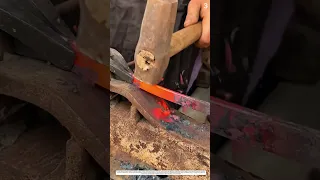
Behind modern metalworking industries lies an important process that combines human skill, material control, and mechanical force: metal forging. This technique plays a significant role in manufacturing because it allows heated metal to be reshaped through mechanical pressure, transforming its original geometry into a different form. Although the process may appear straightforward, it requires accurate positioning, careful observation of the material, and effective coordination between the operator and the machinery.
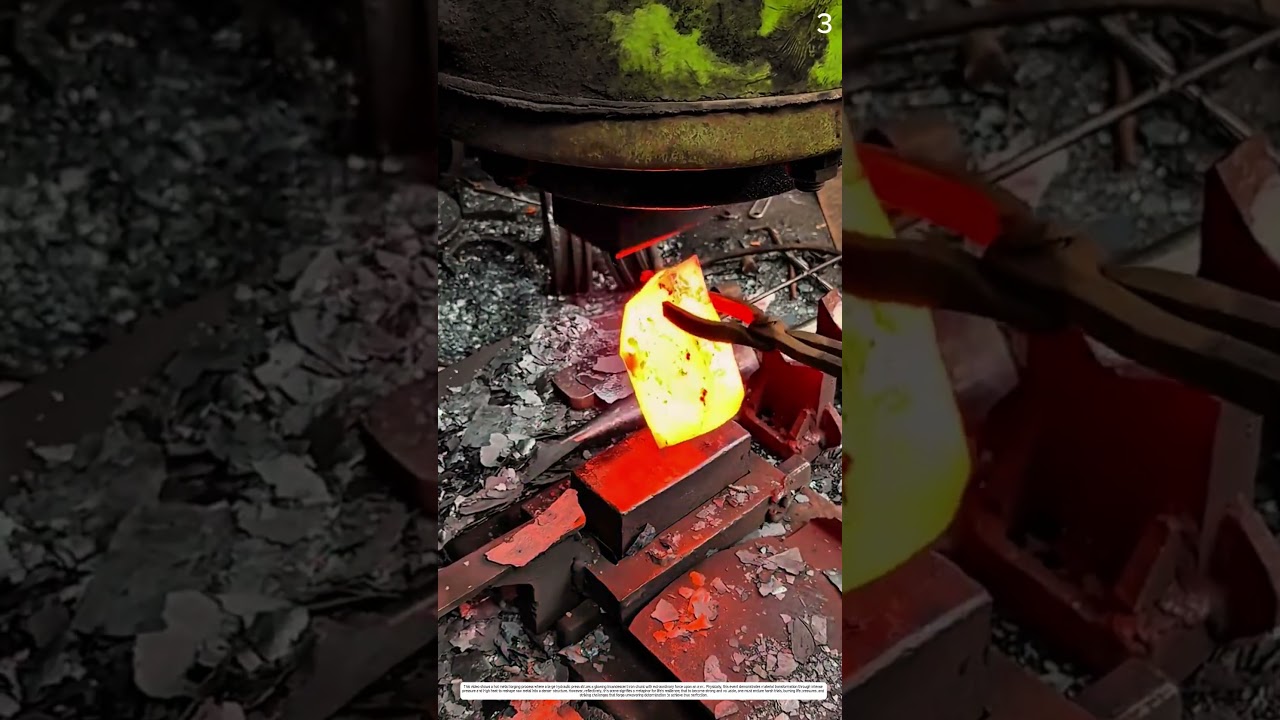
In this video, we can observe the shaping of a metal object while it is still extremely hot. Its surface glows in shades of red, orange, and bright yellow. These visible colors indicate that the material is undergoing a high-temperature heating process. The operator uses a long pair of metal tongs to grip, control, and position the heated object on the working surface.
The next stage reveals a large mechanical machine head moving vertically toward the surface of the metal. Mechanical pressure or repeated impacts are applied to the heated material. After each operation, the operator carefully adjusts the position of the workpiece using the gripping tool, allowing different sections to receive pressure during successive stages of the process.
As the operation continues, the original shape of the material begins to change. Sections that initially appear thicker become flatter and spread outward. The operator repeatedly adjusts the orientation of the metal while the machine applies mechanical force to reshape its surface. Small sparks and scattered fragments around the working area provide a closer look at the intensity of this metalworking operation.
When observed closely, the primary function of the machine is to deliver strong, repeated mechanical pressure onto the workpiece. Its large head moves downward toward the metal, applies force to the surface, and then returns before the next operation. Meanwhile, the operator controls the position and orientation of the material to ensure that the intended sections receive pressure. Since the machine's internal mechanisms are not visible in the footage, its operation can only be described through the movements captured on camera.
From a productivity perspective, mechanical machinery helps perform forging operations that require considerable force and repeated processing. Compared with relying entirely on manual effort, machinery makes it possible to apply pressure more consistently and potentially accelerate the shaping process. Accurate positioning also contributes to achieving a more uniform result. In industrial environments, this type of efficiency can help optimize production time, reduce physical workload, and improve the usefulness and potential value of processed materials.
Ultimately, this process demonstrates that mechanical power alone is not enough to produce quality results. The operator's experience remains essential when determining the position, direction, and sequence of material shaping. When human expertise works together with the precise use of machinery, a piece of heated metal can undergo a remarkable physical transformation through controlled and repeated operations.
This is one of the fascinating aspects of metalworking: the combination of strength, precision, and human craftsmanship. What begins as a simple heated metal object can gradually become a newly shaped material with greater functional potential. It is a powerful reminder that meaningful industrial transformation is achieved not only through machines, but also through the knowledge and judgment of the people who operate them.
- Category
- Twitch Hot Tub
Commenting disabled.
Up Next
Autoplay
-
00:12

Metal Forging: How a Forging Press Transforms Hot Metal into a Solid Form
-
01:35
Inside the forging factory tour Hot Steel forging process #process #forging #blacksmith #factory
-
Ironworking: How Hammering Shapes Hot Metal Into a Flatter Form
-
00:04
Powerful Machine Shapes Red-Hot Iron Into Perfect Form | Heavy Industry Process ????
-
00:30

Twitch's Solution To Hot Tub Streams #shorts
-
38:16

What should Twitch do about hot tub streams? || The Stanz Show #14
-
06:36

amouranth demonetized by twitch hot tub meta destroyed - lol
-
12:16

Twitch Adds a New Category for Hot Tub Streams